
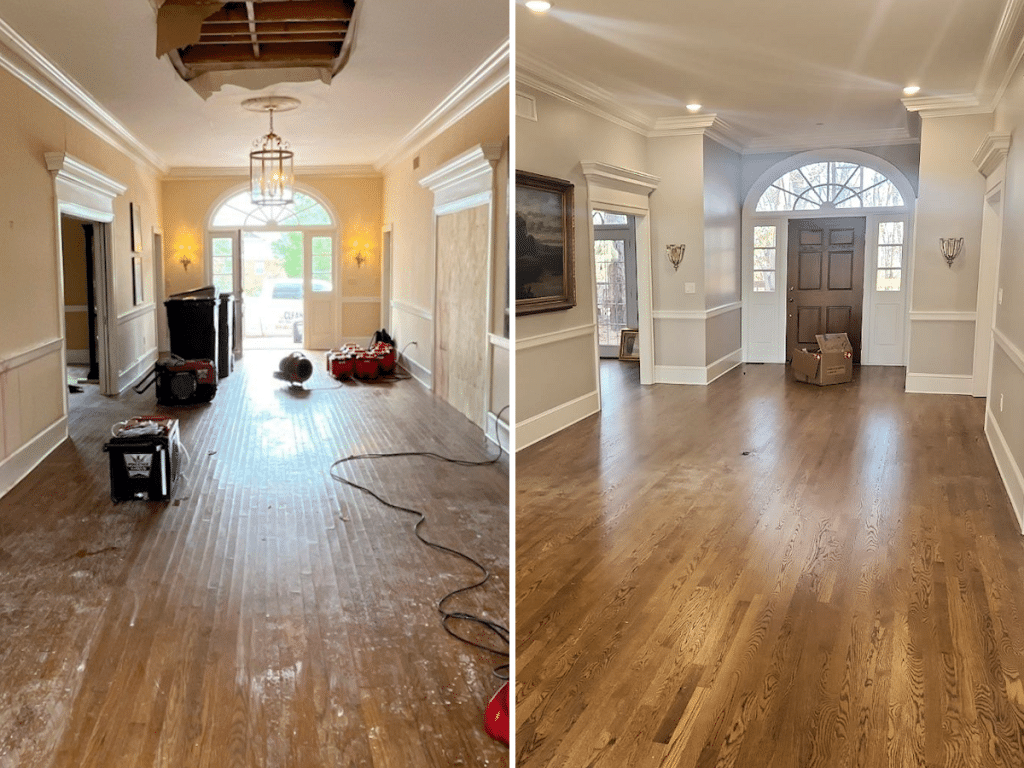
Key Takeaways
- Water damage should be addressed immediately to prevent further damage.
- Mold can begin growing within 24 to 48 hours.
- Professional water extraction and structural drying help protect your property.
- Documenting damage can help with the insurance process.
- CleanWay provides both emergency mitigation and full reconstruction services.
When Water Damage Happens, Time Matters
Whether it’s a burst pipe, overflowing washing machine, leaking water heater, roof leak, or severe storm, water damage can spread quickly throughout your home or business. What starts as a small problem can become a major restoration project if moisture is allowed to remain inside walls, flooring, insulation, or structural materials.
For property owners in Jonesboro, Brookland, Bono, Bay, Paragould, and throughout Northeast Arkansas, knowing what to do during the first 24 hours can help reduce damage and speed up recovery.
Step 1: Put Safety First
Before entering an area affected by water, make sure it is safe to do so.
Standing water can create electrical hazards and may contain contaminants depending on the source of the water. If it is safe, turn off electricity to affected areas and avoid walking through deep water until the situation has been assessed.
If flooding is severe or structural damage is present, leave the area and contact professionals immediately.
Step 2: Stop the Source of the Water
The next priority is preventing additional water from entering the property.
Depending on the situation, this may include:
- Turning off the main water supply
- Shutting off a leaking appliance
- Placing a temporary tarp over a damaged roof
- Stopping water from entering through doors or windows
When the source of the water is plumbing-related, getting the leak under control quickly is especially important. CleanWay Construction & Restoration has a master plumber on staff, allowing our team to address many plumbing-related water losses while coordinating the restoration process.
The longer water continues to enter the structure, the more extensive the damage can become.
Step 3: Contact a Water Damage Restoration Professional
One of the biggest mistakes property owners make is assuming the area has dried simply because standing water has been removed.
Water often travels behind walls, beneath flooring, and into building materials where it cannot easily be seen. Without professional drying equipment, hidden moisture can remain trapped for days or weeks.
Professional water damage restoration services typically include:
- Emergency water extraction
- Structural drying
- Dehumidification
- Moisture monitoring
- Sanitizing and deodorizing
- Mold prevention measures
- Reconstruction services when needed
Fast action often reduces both repair costs and recovery time.
Step 4: Document the Damage
Before cleanup begins, take photos and videos of all affected areas.
Helpful documentation includes:
- Standing water
- Damaged flooring
- Wet drywall
- Damaged furniture
- Appliances involved in the loss
- Personal belongings affected by water
This information can be valuable during the insurance claims process.
Step 5: Move Important Items to Safety
If it can be done safely, move valuable belongings away from affected areas.
Items to protect include:
- Electronics
- Important documents
- Family photographs
- Furniture
- Personal valuables
The sooner items are removed from wet conditions, the better the chance of preventing permanent damage.
Step 6: Don’t Ignore Hidden Moisture
One of the biggest concerns after water damage is moisture that remains out of sight.
Even when surfaces appear dry, moisture can remain inside:
- Drywall
- Flooring
- Insulation
- Cabinets
- Crawl spaces
- Structural framing
This hidden moisture can contribute to mold growth, unpleasant odors, and long-term structural damage if not properly addressed.
Water Damage and Mold Often Go Hand in Hand
Mold can begin developing within 24 to 48 hours when moisture remains inside a building.
Because Northeast Arkansas experiences high humidity throughout much of the year, proper drying is especially important after any water loss.
Professional moisture monitoring and structural drying help ensure that affected materials are dried to acceptable levels before reconstruction begins.
Mitigation vs. Reconstruction: Understanding the Difference
Many property owners are surprised to learn that water damage restoration often involves two separate phases.
Mitigation
Mitigation focuses on preventing additional damage and may include:
- Water extraction
- Structural drying
- Demolition of damaged materials
- Dehumidification
- Sanitizing and deodorizing
Reconstruction
Once the property is dry and safe, reconstruction may include:
- Drywall replacement
- Flooring installation
- Cabinet replacement
- Painting
- Roofing repairs
- Final finish work
Some companies only handle mitigation. CleanWay Construction & Restoration provides both mitigation and reconstruction services, helping property owners work with one team from start to finish. With a master plumber on staff, CleanWay can also address many plumbing-related issues that may have caused the water loss, reducing the need to coordinate multiple contractors.
Frequently Asked Questions
How quickly should water damage be addressed?
Immediately. Water damage can spread quickly, and mold can begin developing within 24 to 48 hours.
Can mold grow after water damage?
Yes. Mold growth often begins when moisture remains trapped in walls, flooring, insulation, or other building materials.
What is structural drying?
Structural drying is the process of removing moisture from building materials using professional air movers, dehumidifiers, and moisture monitoring equipment.
Does homeowners insurance cover water damage?
Coverage depends on the cause of the loss. CleanWay works closely with insurance adjusters and can help document damage during the restoration process.
Can CleanWay help if the water damage was caused by a plumbing problem?
Yes. CleanWay has a master plumber on staff who can address many plumbing-related issues associated with water damage, while the restoration team handles water extraction, drying, cleanup, and repairs.
Does CleanWay provide reconstruction services?
Yes. CleanWay provides both emergency mitigation and reconstruction services, helping homeowners and businesses restore their properties from beginning to end.
Why Homeowners Choose CleanWay
When disaster strikes, property owners want more than cleanup—they want a trusted partner throughout the restoration process.
CleanWay Construction & Restoration offers:
- Family-owned and operated Arkansas company
- Offices in Jonesboro and Conway
- Master plumber on staff
- Emergency water damage restoration
- Structural drying and mold remediation
- Roofing and reconstruction services
- Residential and commercial restoration
- Assistance working with insurance adjusters
From stopping the source of a plumbing-related water loss through drying, cleanup, repairs, and final reconstruction, our goal is to help homeowners and businesses recover as quickly as possible.
Need Water Damage Restoration in Jonesboro?
If your home or business has experienced water damage, don’t wait. Fast response can help reduce damage, prevent mold growth, and shorten recovery time.
CleanWay Construction & Restoration proudly serves Jonesboro, Brookland, Bono, Bay, Paragould, and communities throughout Northeast Arkansas with professional water damage restoration, structural drying, plumbing expertise, and reconstruction services.